Hard water is one of those household problems you can live with for a while—until you start noticing what it’s doing. White spots appear on faucets. Soap refuses to lather properly. Glassware comes out cloudy, and over time, mineral deposits can build up inside pipes, water heaters, and appliances.
A water softener can help solve many of these issues. But what actually happens inside that tank sitting in your garage or utility room? The answer comes down to a fairly clever process involving minerals, resin, and salt.
Understanding how a water softener works makes it easier to choose the right system, maintain it properly, and recognize when something isn’t working as it should.
What Makes Water “Hard”?
Hard water contains dissolved minerals, mainly calcium and magnesium. These minerals naturally enter groundwater as water moves through soil and rock. They aren’t usually a reason to panic—calcium and magnesium are common minerals—but they can create plenty of everyday headaches.
You may notice several signs of hard water around the house:
- Soap scum on sinks and showers
- White mineral deposits on faucets
- Dry-feeling skin or dull-looking hair
- Reduced efficiency in water heaters
- Scale buildup inside plumbing
- Spots on dishes and glassware
- Laundry that feels stiff after washing
The severity varies from one home to another. Some households barely notice hard water, while others deal with heavy scaling almost everywhere water flows.
The Science Behind a Water Softener
At the heart of most traditional water softeners is ion exchange. It sounds technical, but the basic idea is surprisingly simple.
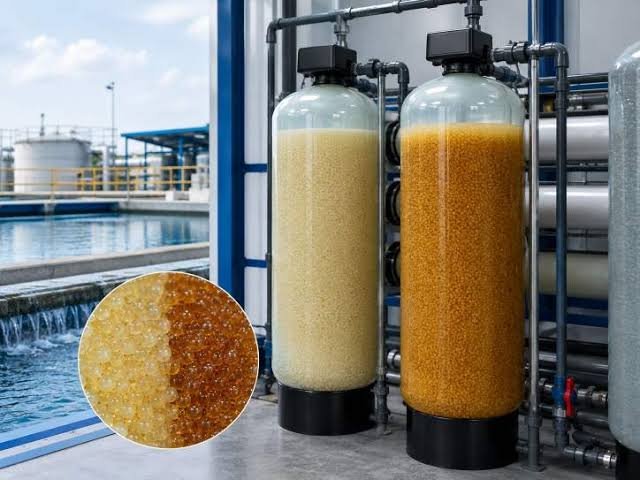
Inside the softener is a special material called resin. The resin beads are designed to attract positively charged mineral ions. When hard water passes through them, calcium and magnesium ions stick to the resin. In exchange, sodium ions are released into the water.
That exchange is what makes the water “soft.”
Think of the resin like a parking lot with limited spaces. Calcium and magnesium arrive and take spaces that were previously occupied by sodium. Eventually, most of the available spaces become filled with hard-water minerals. At that point, the system needs to regenerate the resin so it can keep working.
This process happens automatically in a properly programmed water softener.
What Is a Resin Tank?
The resin tank is the main working chamber of a conventional water softener. It usually looks like a tall, narrow cylinder and contains thousands of tiny resin beads.
When water enters the tank, it travels through the resin bed. The beads capture calcium and magnesium, allowing softened water to continue through the plumbing system.
The tank itself is generally designed to withstand water pressure and years of repeated regeneration cycles. Inside, the resin may remain effective for many years, although its lifespan depends on water chemistry, usage, system quality, and maintenance.
It’s worth remembering that the resin isn’t a filter in the traditional sense. It doesn’t simply trap dirt or sediment. Instead, it performs a chemical exchange with dissolved minerals.
That distinction matters when you’re choosing additional filtration equipment. A water softener may address hardness, but it isn’t necessarily designed to remove every contaminant in your water.
The Role of the Brine Tank
Next to the resin tank, you’ll usually find the brine tank. This is where salt and water are used to create the brine solution required for regeneration.
During normal operation, the brine tank isn’t doing the actual softening. Its job comes into play when the resin needs to be refreshed.
During regeneration, salty water is drawn from the brine tank and pushed through the resin tank. The high concentration of sodium helps displace the calcium and magnesium that have accumulated on the resin beads. Those unwanted minerals are then flushed away through the drain.
Afterward, the resin is ready to soften water again.
Most modern systems handle this process automatically, often during the night when household water demand is lower. Some advanced softeners monitor actual water consumption and regenerate only when necessary rather than following a simple fixed schedule.
Why Regeneration Matters
Without regeneration, the resin would eventually become saturated with hard-water minerals. Once that happens, the softener can’t effectively remove additional calcium and magnesium.
Regeneration essentially resets the resin.
A typical regeneration cycle may include several stages, such as backwashing, brining, slow rinsing, fast rinsing, and refilling the brine tank. The exact sequence depends on the design of the equipment.
You don’t normally need to stand beside the system and supervise this process. Still, understanding what’s happening can be useful if you ever troubleshoot the unit.
For example, if the system suddenly produces hard water even though the settings appear correct, possible causes could include a salt issue, a control valve problem, depleted resin, or a malfunction in the regeneration cycle.
Does a Water Softener Remove Everything?
No—and this is an important point.
A water softener is primarily designed to reduce hardness minerals. It isn’t a universal water purifier.
Depending on your water source, you may also need filtration for sediment, chlorine, iron, sulfur compounds, or other contaminants. Private well water, in particular, can have characteristics that require additional treatment.
That’s why water testing is a smart first step. Instead of buying equipment based on guesswork, you can identify what’s actually in the water and choose treatment accordingly.
A softener may be part of the answer, but it doesn’t necessarily need to be the entire solution.
Keeping Your Water Softener in Good Shape
Water softeners aren’t especially demanding, but a little maintenance goes a long way.
If your system uses salt, check the salt level regularly and avoid letting the tank remain empty for long periods. It’s also a good idea to inspect for salt bridging, where salt forms a hard crust that prevents proper brine formation.
Keep an eye out for changes in water quality, unusual sounds, leaks, or repeated regeneration problems. If you notice that scale is returning on fixtures, don’t automatically assume you need more salt. The underlying issue could be something else.
And don’t forget the basics: follow the manufacturer’s maintenance instructions and have the system professionally inspected when necessary.
Choosing the Right System for Your Home
Not every household needs the same type or size of water softener. Household size, daily water consumption, water hardness, plumbing configuration, and water source all matter.
An undersized system may regenerate too frequently, while an oversized unit can be unnecessarily expensive and waste resources. Salt efficiency is another consideration, especially for households trying to reduce operating costs.
The best approach is to test the water first, understand your hardness level, and then compare systems based on capacity and efficiency—not simply price.
After all, the cheapest equipment isn’t always the cheapest option over several years.
A Small System That Makes a Big Difference
Water softeners aren’t particularly glamorous pieces of home equipment. You probably don’t think about yours while making coffee or taking a shower. Yet the technology quietly protects plumbing, appliances, fixtures, and everyday comfort.
The process is built around a simple idea: remove calcium and magnesium from water by exchanging them for sodium ions, regenerate the resin when it becomes saturated, and keep the cycle going.
Once you understand the roles of the resin tank, regeneration process, and brine system, the whole thing becomes much less mysterious.
And if hard water has been causing trouble in your home, that little bit of knowledge can help you make a much smarter decision about treatment.