
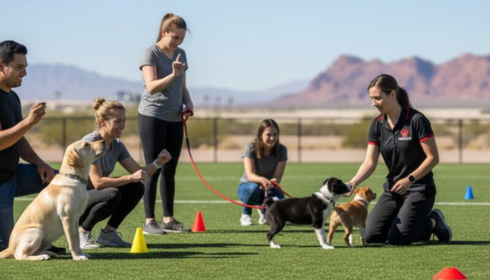
Puppy foundation training programs are the most important starting point in shaping a dog’s long-term behavior, emotional stability, and obedience. The earliest stage of a puppy’s life is when learning happens at the fastest rate, making it the ideal time to introduce structure, guidance, and consistency. Well-designed puppy foundation training programs help prevent common behavioral issues such as excessive barking, biting, anxiety, leash pulling, and destructive chewing.
For dog owners in fast-paced environments like Phoenix, Arizona, early training is not optional it is essential. A puppy that receives proper guidance early in life is far more likely to grow into a calm, confident, and well-mannered adult dog. This is why puppy foundation training programs play such a critical role in long-term success. In this guide, we explore how these programs work, what they include, and how they shape lifelong behavior.
Why Puppy Foundation Training Programs Matter in the Early Months
The first 8 to 16 weeks of a puppy’s life represent a critical learning window. During this time, puppies are highly receptive to new experiences, routines, and behavioral expectations. What they learn or fail to learn during this period has a lasting impact on their behavior as adults.
Effective puppy foundation training programs focus on building essential life skills, including:
- Early obedience (sit, stay, come, down)
- Socialization with humans and other dogs
- House training and routine development
- Bite inhibition and chewing control
- Exposure to environmental stimuli
Without structured training, puppies often develop habits that become harder to correct later in life. Addressing behavioral issues in adulthood typically requires more time, effort, and consistency compared to early-stage training.
Core Structure of Puppy Foundation Training Programs
A strong training program is more than just teaching commands it is about shaping behavior through repetition, reinforcement, and environment management. The best puppy foundation training programs combine structure with positive reinforcement to create lasting results.
1. Positive Reinforcement Training Methods
Modern training approaches rely heavily on positive reinforcement. Instead of punishing unwanted behavior, puppies are rewarded for making correct choices. This encourages repetition of good behavior and builds trust between the puppy and owner.
Common rewards include:
- High-value treats
- Verbal praise such as “good boy/girl”
- Toys and play sessions
- Affection and attention
This approach strengthens communication and helps puppies associate training with positive experiences.
2. Early Socialization and Environmental Exposure
Socialization is one of the most important pillars of puppy foundation training programs. Puppies must be gradually exposed to a wide variety of experiences during their early development stage.
This includes exposure to:
- Different people (children, adults, strangers)
- Other vaccinated dogs
- Urban environments and traffic sounds
- Household appliances and noises
- Parks, sidewalks, and public spaces
Proper socialization helps prevent fear-based aggression, anxiety, and overreactive behavior. In busy cities like Phoenix, where dogs encounter diverse environments daily, early social exposure is especially important.
3. Crate Training for Structure and Comfort
Crate training is a key part of most puppy foundation training programs because it provides structure, safety, and routine. When introduced properly, a crate becomes a secure space where puppies can rest and relax.
Benefits of crate training include:
- Faster house training success
- Reduced destructive behavior when unsupervised
- Improved sleep patterns and routines
- Reduced separation anxiety over time
The crate should never be used as punishment. Instead, it should be a positive, calm space that the puppy voluntarily enters.
4. House Training and Routine Building
House training is often one of the first challenges new puppy owners face. Success depends on consistency, timing, and reinforcement.
Key strategies include:
- Taking puppies outside frequently (especially after meals, naps, and play)
- Using consistent verbal cues like “go potty”
- Rewarding immediately after successful outdoor elimination
- Supervising indoor behavior closely to prevent accidents
Routine is everything. Puppies learn faster when they can predict when and where they are expected to eliminate.
5. Impulse Control and Basic Obedience Skills
Impulse control is the foundation of good behavior. Without it, puppies may struggle with jumping, biting, or ignoring commands when excited.
Essential obedience commands taught in puppy foundation training programs include:
- Sit
- Stay
- Come
- Down
- Leave it
- Heel (basic leash walking)
These commands help establish structure, improve communication, and create safer behavior in everyday situations.
Common Training Mistakes That Slow Progress
Even well-intentioned owners can unintentionally hinder their puppy’s progress. Avoiding common mistakes can significantly improve results.
Inconsistent Rules and Boundaries
Allowing behaviors one day and discouraging them the next confuses puppies and slows learning.
Overusing Punishment-Based Methods
Harsh corrections can create fear, anxiety, and avoidance behaviors, damaging the trust between owner and puppy.
Waiting Too Long to Begin Training
Delaying training allows unwanted behaviors to become habits that are harder to change later.
Skipping Daily Practice
Short, consistent training sessions are more effective than occasional long sessions.
Lack of Socialization Exposure
Puppies that are not properly socialized may develop fear or aggression toward new experiences.
How Phoenix Environment Impacts Puppy Training
Location plays a significant role in training success. In Phoenix, Arizona, environmental factors must be considered when designing effective puppy foundation training programs.
Key environmental influences include:
- High temperatures requiring early morning or evening training sessions
- Urban distractions such as traffic, crowds, and noise
- Limited outdoor exposure during peak heat hours
- Need for indoor enrichment activities during hot afternoons
Adjusting training routines to local conditions helps ensure safety while maintaining consistency.
Professional Training Programs vs. At-Home Training
While some owners choose to train their puppies independently, professional training programs offer structured advantages that can speed up progress and improve outcomes.
Benefits of Professional Puppy Foundation Training Programs
- Expert guidance on behavior correction
- Structured curriculum designed for developmental stages
- Controlled socialization opportunities
- Faster resolution of common behavioral issues
- Reduced risk of training mistakes
At-home training can still be effective, especially when owners are consistent and well-informed. However, professional programs help ensure that no critical developmental steps are missed.
Building Long-Term Behavioral Stability
The ultimate goal of puppy foundation training programs is not just obedience during puppyhood it is long-term behavioral stability. Puppies who receive structured early training are more likely to grow into balanced adult dogs.
Long-term benefits include:
- Reliable obedience in various environments
- Reduced behavioral problems in adulthood
- Improved social confidence
- Better adaptability to new situations
- Stronger bond with owners
Consistency, patience, and positive reinforcement remain the foundation of lifelong success.
Expanding Skills Beyond the Basics
Once a puppy masters foundational skills, training can progress into more advanced behaviors that improve real-world reliability.
These include:
- Loose leash walking in distracting environments
- Recall under high distraction
- Calm behavior during greetings
- Extended “stay” commands
- Controlled exposure to public spaces
These advanced skills ensure that training extends beyond the home and applies to real-life situations.
When to Start Puppy Foundation Training Programs
The ideal time to begin training is immediately after bringing a puppy home, typically around 8 weeks of age. Early intervention ensures that good habits form before bad ones develop.
Starting early helps:
- Establish routine quickly
- Prevent behavioral issues from forming
- Build confidence in new environments
- Strengthen the human-dog bond early
Even older puppies can benefit from structured programs, but early training produces the most effective and lasting results.
The Importance of a Strong Start
Puppy foundation training programs are one of the most valuable investments a dog owner can make. The early stages of development shape a dog’s lifelong behavior, emotional balance, and ability to adapt to the world around them. With the right combination of structure, consistency, and positive reinforcement, puppies can develop into well-mannered, confident companions.
For owners seeking professional guidance and structured support, Rob’s Dog Training in Phoenix provides a reliable pathway for building strong foundational skills. A well-trained puppy today becomes a well-behaved, confident dog for years to come, making early training one of the most important steps in responsible pet ownership.